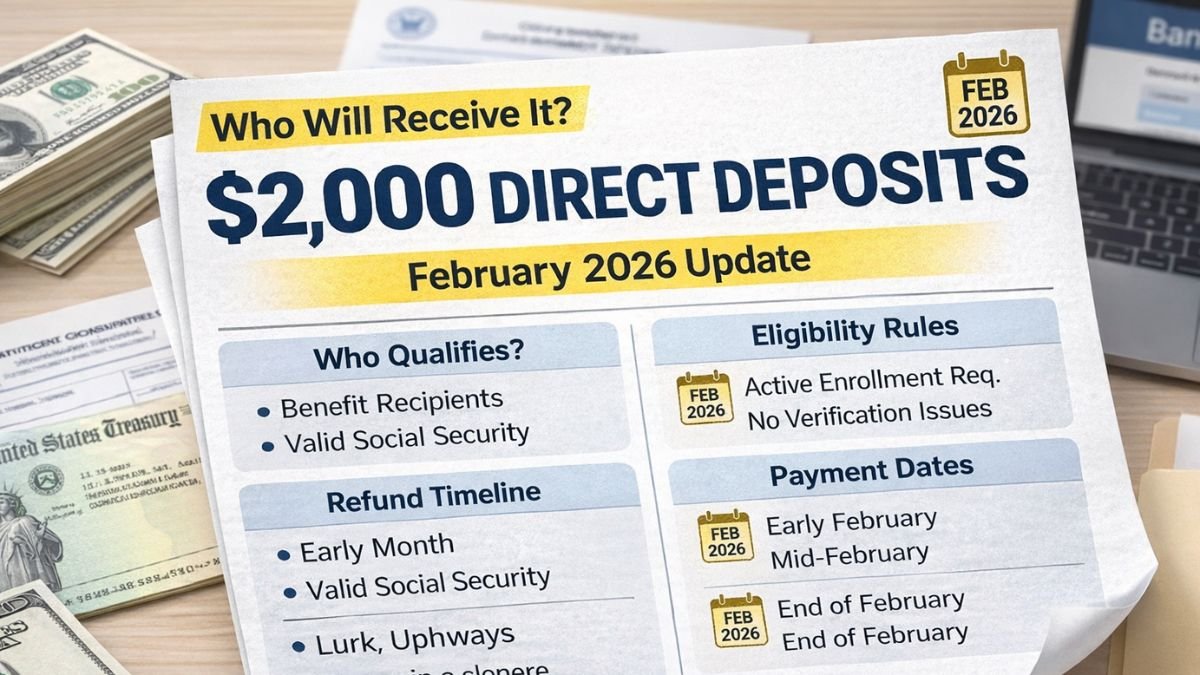
The idea of a $2,000 direct deposit arriving in February 2026 has sparked widespread attention online. Social media posts and trending headlines are fueling hope that a large federal payment could soon hit bank accounts.
But before making financial plans around this amount, it is important to understand what the $2,000 figure actually represents, who may qualify, and when deposits could realistically arrive.
Here is a simple and clear breakdown of refund eligibility, payment timelines, and what taxpayers should expect.
Is There a Confirmed $2,000 Federal Payment for February 2026?
As of now, there is no officially approved nationwide $2,000 stimulus payment specifically scheduled for February 2026. Any new federal stimulus program would require legislation passed by Congress and formal announcements from federal agencies.
Most of the discussion surrounding this amount appears linked to tax refunds and refundable credits rather than a new automatic stimulus check.
Understanding this distinction is critical to avoiding confusion.
What the $2,000 Amount Likely Refers To
For many taxpayers, $2,000 represents a potential tax refund amount based on:
• Child Tax Credit eligibility
• Earned Income Tax Credit qualifications
• Recovery Rebate Credit claims
• Excess federal withholding from paychecks
• Combined refundable credits on a 2025 tax return
Depending on income level, dependents, and filing status, some individuals may see refunds close to or exceeding $2,000 during the 2026 tax season.
When Could Deposits Arrive in February 2026?
The Internal Revenue Service generally begins processing tax returns in late January. If you file electronically and choose direct deposit, many refunds are issued within about 21 days of acceptance.
For early filers, this means refunds could begin appearing in mid to late February 2026. However, several factors influence the timeline:
Accuracy of the tax return
Verification checks for refundable credits
Identity confirmation requirements
Bank processing times
Paper returns typically take much longer to process.
Who May Be Eligible for a Larger Refund?
Eligibility for a refund around $2,000 depends entirely on your individual tax situation. You may receive an amount near this figure if:
You qualify for refundable tax credits
You have one or more eligible dependents
You had higher federal tax withholding during 2025
You are claiming missed credits from prior tax years
Not every taxpayer will receive this amount, and refund totals vary widely.
Why Some Refunds May Be Delayed
The IRS continues to apply fraud prevention measures that may slow down certain refunds. Taxpayers claiming credits such as the Earned Income Tax Credit or Child Tax Credit may see slightly longer processing times due to verification reviews.
Incorrect personal information, mismatched Social Security numbers, or outdated banking details can also delay deposits.
Filing accurately remains the best way to reduce processing delays.
How to Protect Yourself From Payment Scams
Whenever large payment rumors trend online, scam attempts often increase. Fraudsters may send fake messages claiming you must provide banking details to receive a deposit.
Remember:
Official refunds are processed automatically after filing
The government does not request payment to release funds
Always verify updates through official channels
Staying cautious protects your financial information.
What Taxpayers Should Do Now
If you expect a refund in 2026, gather all necessary tax documents early and review your eligibility for available credits. Filing electronically with direct deposit remains the fastest option.
Setting realistic expectations based on your own tax return is more reliable than relying on viral claims.
Conclusion
While headlines about $2,000 direct deposits in February 2026 are gaining attention, there is no confirmed universal stimulus payment at this time. For many Americans, the figure likely refers to potential tax refunds based on credits and withholding.
Understanding refund eligibility and processing timelines can help prevent disappointment and confusion. Filing accurately and staying informed is the smartest way to ensure you receive any money owed to you.
Disclaimer: This article is for informational purposes only and does not constitute tax or financial advice. For official guidance, consult the Internal Revenue Service or a qualified tax professional.