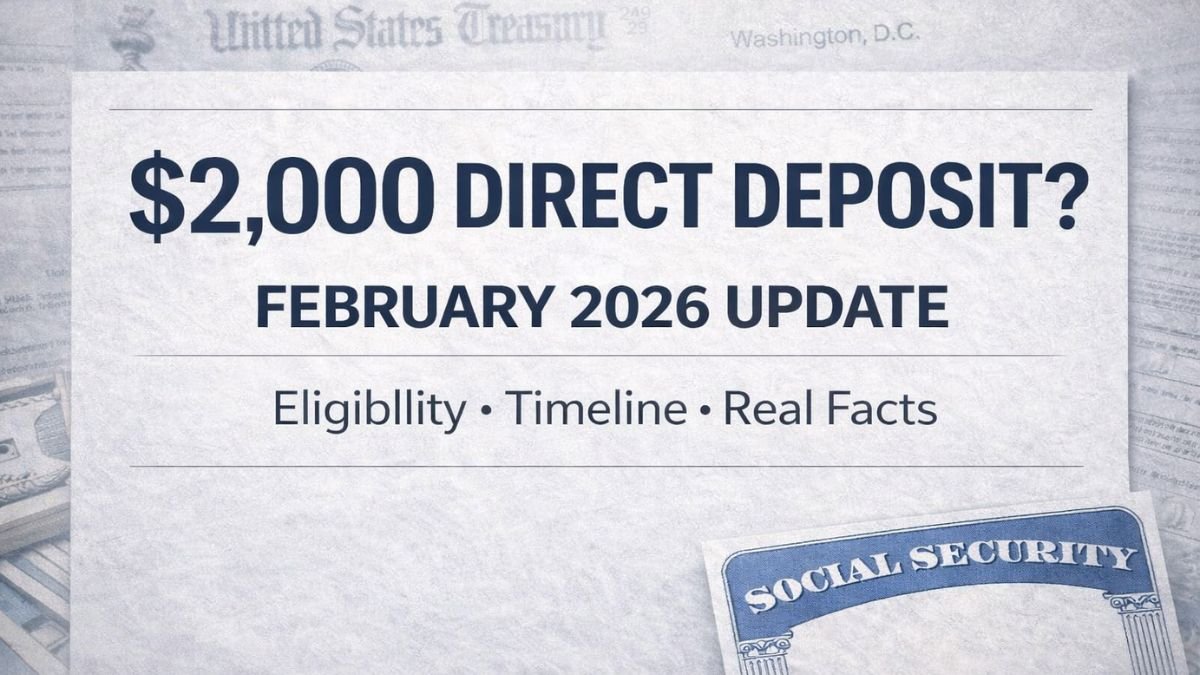
The buzz around a possible $2,000 direct deposit in February 2026 is spreading fast. Social media posts, viral headlines, and online forums are fueling expectations that a major federal payment could soon arrive in millions of bank accounts.
But is this payment officially approved, who qualifies, and when would the money actually arrive? Before making financial decisions based on trending claims, here is a clear and simple breakdown of the eligibility rules, timeline, and verified facts.
Is a $2,000 Direct Deposit Officially Confirmed?
As of now, there is no confirmed nationwide $2,000 stimulus payment scheduled for February 2026. Any new federal direct payment would require congressional approval and an official announcement from government agencies.
Most online discussions appear to be linked to tax refunds or refundable credits rather than a newly approved stimulus program. Without formal legislation, automatic deposits of this amount are not being issued.
Understanding this difference is crucial to avoid unrealistic expectations.
What the $2,000 Figure May Actually Represent
For many taxpayers, $2,000 is a common refund amount tied to federal tax credits or overpaid taxes. During the 2026 tax season, some individuals may receive refunds around this amount depending on their personal tax situation.
Common sources that could total near $2,000 include:
• Child Tax Credit eligibility
• Earned Income Tax Credit qualification
• Recovery Rebate Credit claims
• Excess federal tax withholding
• Combined refundable credits on a filed return
Each taxpayer’s refund depends on income, dependents, filing status, and deductions.
February 2026 Timeline Explained
The IRS typically begins processing tax returns in late January. For taxpayers who file electronically and select direct deposit, many refunds are issued within approximately 21 days after acceptance.
If you file early and your return has no errors or verification issues, your refund could arrive in February 2026. However, processing times vary based on:
Accuracy of the information provided
Credit claims requiring additional review
Identity verification checks
Bank processing times
Paper returns and amended filings take significantly longer.
Who May Be Eligible for a Refund Around $2,000?
Eligibility is not universal. You may receive a refund close to $2,000 if:
You qualify for refundable tax credits
You have eligible dependents
You had substantial federal withholding during 2025
You are claiming credits missed in previous years
Refund amounts vary widely, and some taxpayers may receive more or less depending on their circumstances.
Why Some Refunds May Be Delayed
The IRS continues to apply strict fraud prevention measures. Returns that claim certain refundable credits often undergo additional review. Incorrect Social Security numbers, outdated banking details, or missing documents can also slow processing.
To reduce delays, file electronically, double check all entries, and ensure your direct deposit information is accurate.
Avoiding Payment Scams
Whenever large payment rumors trend online, scam attempts increase. Fraudsters may claim you must confirm personal information to receive your deposit.
Remember:
The IRS does not request personal details through unsolicited messages
Official refunds are issued automatically after proper filing
No legitimate government payment requires an upfront fee
Protecting your personal information should always be a priority.
What You Should Do Now
If you expect a refund in 2026, gather tax documents early and review your eligibility for available credits. Filing electronically with direct deposit remains the fastest method.
Setting realistic expectations based on your tax return is more reliable than relying on viral claims.
Conclusion
While headlines about a $2,000 direct deposit in February 2026 are generating attention, there is no confirmed nationwide stimulus payment at this time. For many taxpayers, the amount likely refers to potential tax refunds based on credits and withholding.
Understanding eligibility rules and processing timelines helps prevent confusion. Filing accurately and staying informed is the best way to ensure you receive any money owed to you without delays.
Disclaimer: This article is for informational purposes only and does not constitute tax or financial advice. For official guidance, consult the Internal Revenue Service or a qualified tax professional.