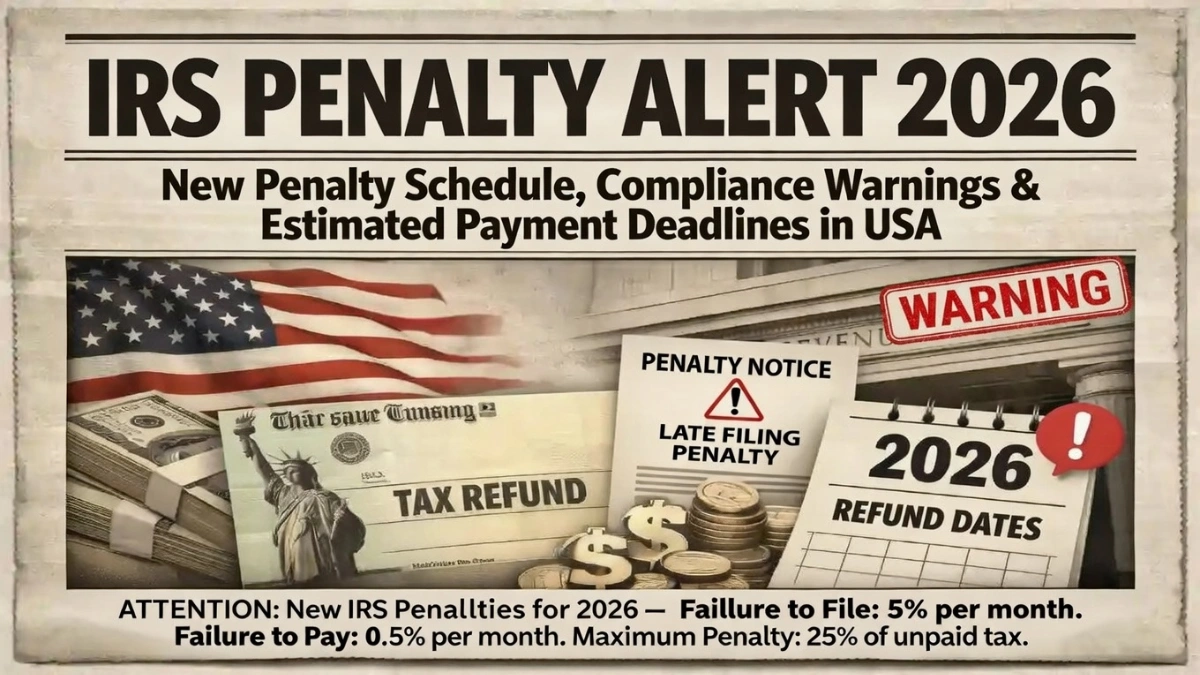
Tax season stress does not end once the filing window closes. In 2026, taxpayers who miss required filing deadlines or submit incomplete information returns could face significant penalties. Some violations may trigger fines of up to $680 per form, depending on the type of filing and how late it is submitted.
Who Enforces Late Filing Penalties
All federal tax penalties are assessed and enforced by the Internal Revenue Service. The agency applies structured penalty rules based on the type of return, how late it is filed, and whether the failure was intentional.
Penalties can increase the longer a return remains unfiled.
When the $680 Per Form Penalty Applies
Higher-tier penalties often apply to information returns such as Forms 1099 or W-2 when they are intentionally disregarded or filed significantly late. In certain cases, the maximum penalty per form can reach $680.
The total fine can grow quickly if multiple forms are involved.
Difference Between Filing Late and Paying Late
Two separate penalties may apply:
Failure-to-file penalty
Failure-to-pay penalty
The failure-to-file penalty is typically higher and accrues monthly until the return is submitted. Even if you cannot pay the full balance, filing on time helps reduce overall penalties.
What Happens After the Deadline Passes
Once the deadline has passed, interest begins accruing on unpaid taxes. The IRS may send notices outlining penalties and payment options. Ignoring these notices can lead to additional enforcement action.
Responding promptly reduces further financial impact.
Options If You Missed the Deadline
Taxpayers who missed the deadline should file as soon as possible to minimize penalties. Payment plans, installment agreements, or temporary hardship options may be available depending on circumstances.
Proactive communication can prevent escalation.
How to Avoid Future Penalties
Keep track of annual filing deadlines, request extensions before due dates if needed, and maintain accurate financial records. Businesses should ensure all required information returns are prepared and submitted on time.
Good recordkeeping lowers compliance risks.
Conclusion: Missing the 2026 tax deadline can result in costly penalties, including fines that may reach $680 per required form in certain cases. Filing promptly, even if payment cannot be made in full, helps limit additional charges. Staying informed about IRS requirements is essential to avoid unnecessary financial setbacks.
Disclaimer: This article provides general informational guidance regarding federal tax penalties. Actual fines and enforcement actions depend on individual circumstances and official IRS determinations. For precise advice, consult authorized government resources or a qualified tax professional.