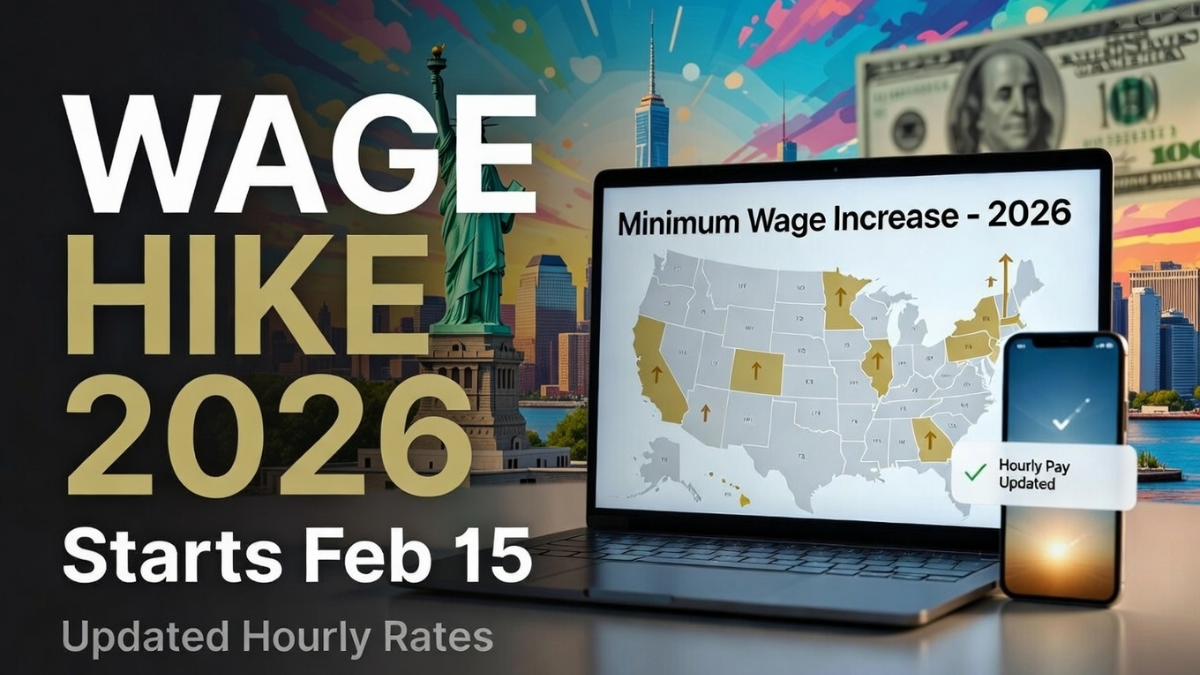
Millions of workers are paying close attention to minimum wage updates in 2026 as several states implement new hourly pay rates. With February 15 marking the start date for updated wages in certain regions, employees and employers alike need clarity on what is changing and who is affected.
Here is a detailed breakdown of the 2026 minimum wage increase, where it applies, and how it could impact paychecks.
Is There a Federal Minimum Wage Increase in 2026?
As of now, the federal minimum wage set under the Fair Labor Standards Act remains unchanged unless new legislation is passed by the United States Congress. Any nationwide federal wage increase requires formal approval and enactment into law.
However, individual states and local governments have the authority to set higher minimum wage rates than the federal baseline. Many state level increases take effect annually based on scheduled legislation or inflation adjustments.
Why February 15 Matters in 2026
Certain states have designated February 15 as the effective date for updated hourly wage rates. These adjustments may reflect inflation based indexing, pre approved wage phase in schedules, or newly enacted state laws.
Workers in affected states should review official labor department announcements to confirm whether their hourly rate has changed.
Updated Hourly Pay Rates by State
Minimum wage increases vary significantly by state. Some states implement small annual inflation linked increases, while others follow multi year plans gradually raising the wage floor.
Employees working in cities with local minimum wage ordinances may receive even higher rates than their state minimum.
Because wage laws differ across jurisdictions, workers should confirm the applicable rate in their specific location.
Who Benefits From the 2026 Increase
Hourly workers earning minimum wage or slightly above it are most directly impacted. Industries such as retail, hospitality, food service, and entry level positions often see immediate wage adjustments when new rates take effect.
In some cases, tipped employees may also see adjustments to their base wage depending on state rules.
Higher minimum wages can increase overall earnings but may also influence scheduling hours or staffing policies depending on employer budgets.
How Employers Must Comply
Employers are required to update payroll systems to reflect new state or local minimum wage rates starting on the effective date. Failure to comply can result in penalties and back pay obligations.
Employees who believe they are not receiving the correct wage should contact their state labor department for guidance.
Economic Impact of Minimum Wage Changes
Minimum wage increases are often tied to cost of living adjustments. Supporters argue they help workers keep pace with inflation, while critics raise concerns about business costs and employment levels.
The overall impact depends on regional economic conditions and employer adaptation strategies.
What Workers Should Do Now
Workers should confirm their updated hourly rate with their employer once the February 15 increase takes effect. Reviewing pay stubs and tracking hours worked ensures accurate compensation.
Staying informed about local wage laws helps employees understand their rights and avoid underpayment.
Conclusion
The 2026 minimum wage increase beginning February 15 reflects ongoing state level efforts to adjust pay rates in response to inflation and legislative changes. While there is no confirmed nationwide federal wage hike unless Congress acts, many workers will see higher hourly earnings depending on their state or city.
Understanding where and how these updates apply ensures workers and employers remain compliant and financially prepared.
Disclaimer: This article is for informational purposes only and summarizes general minimum wage updates. Wage laws and effective dates vary by state and local jurisdiction.